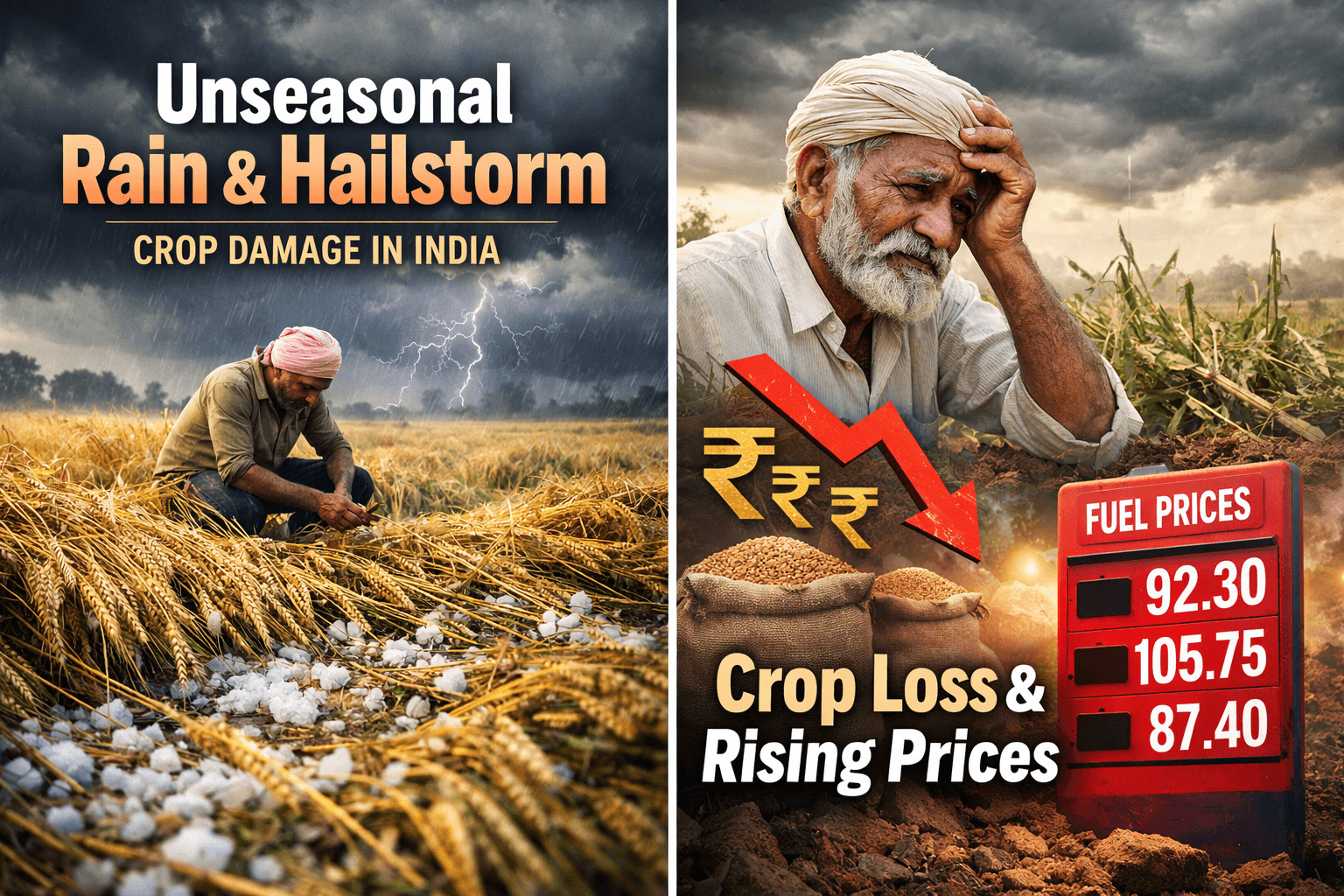
📰 Unseasonal Rain and Hailstorms Impact Rabi Crops Across India; Relief Measures Announced
Unseasonal rain and hailstorms in March 2026 have affected rabi crops across several Indian states. Here’s what it means for farmers, food supply, and prices.
Introduction
Unseasonal rain and hailstorms across several parts of India in March 2026 have affected standing and harvest-ready rabi crops, raising concerns about farm incomes and crop output. The weather activity, linked to active western disturbances, occurred during a crucial harvesting period in multiple states.
Government officials have initiated assessment and relief measures, while authorities continue to monitor the situation.
Key Developments
- Rainfall recorded above normal levels in parts of March
- Crops such as wheat, mustard, cumin, and some horticultural produce affected
- Damage levels vary by region, based on preliminary reports
- Government begins relief and insurance-related processes
- Possible impact on supply and prices under review
Government Response
Shivraj Singh Chouhan chaired a review meeting to assess the situation and directed officials to take necessary steps.
Key actions include:
- Rapid assessment of crop damage
- Coordination with state governments
- Processing claims under Pradhan Mantri Fasal Bima Yojana
Officials have also indicated that food grain stocks remain available, which may help manage short-term supply concerns.
Weather Conditions and Causes
According to the India Meteorological Department, the rainfall and hailstorm activity was influenced by western disturbances affecting northern and central regions.
States reporting weather-related impact include:
- Uttar Pradesh
- Madhya Pradesh
- Maharashtra (including Vidarbha and Marathwada)
- Rajasthan
- West Bengal
- Odisha
- Karnataka
Further weather activity is being monitored, and advisories may be issued depending on conditions.
Regional Impact Overview
North India
Parts of Punjab and nearby regions reported flattened wheat crops due to rainfall and strong winds. Damage levels differ across districts.
Western India
In Rajasthan, some areas have reported losses in crops such as cumin and mustard, though final estimates are still being compiled.
Southern India
In Andhra Pradesh, preliminary assessments indicate crop losses across maize, paddy, and pulses in certain districts.
Other Regions
Maharashtra, Uttar Pradesh, and Madhya Pradesh have reported localized crop impacts, while eastern states have seen effects on horticulture and vegetable crops.
Why the Timing Matters
The weather event coincided with the late stages of the rabi season, when crops are close to harvest. This timing can affect:
- Crop yield and quality
- Harvest schedules
- Storage and supply chains
India had recorded a strong sowing season for crops like wheat and oilseeds, making the timing of these events particularly significant.
Possible Economic Impact
While final estimates are awaited, potential effects may include:
- Reduced income for affected farmers
- Delays in harvesting activities
- Variations in crop quality
- Possible changes in market prices depending on supply levels
The overall impact will depend on the extent of damage confirmed through official assessments.
Weather Variability and Agriculture
Experts have noted increasing variability in weather patterns in recent years. Unseasonal rainfall events, especially during harvest periods, can create uncertainty for agricultural planning.
This highlights the importance of:
- Improved forecasting systems
- Risk management strategies
- Wider adoption of crop insurance
Frequently Asked Questions
What caused the unseasonal rain?
Weather activity linked to western disturbances contributed to rainfall and hailstorms in several regions.
Which crops are affected?
Crops such as wheat, mustard, cumin, maize, paddy, and some horticultural produce have been impacted in different areas.
Will food prices increase?
Price impact will depend on final crop damage estimates and supply conditions in the coming weeks.
Conclusion
The unseasonal rain and hailstorms in March 2026 have affected parts of India’s rabi crop cycle at a critical stage. While the government has initiated response measures, the overall impact will become clearer after detailed assessments.
The situation underscores the need for continued focus on agricultural resilience and effective risk management in the face of changing weather patterns.